
Bitcoin in ten minutes
What it is, why the supply is capped, how a payment actually moves, and what to do before you buy anything.
This is the page I wish someone had handed me before the first YouTube video. Not a whitepaper. Not a price target. How the thing works, why the cap matters in a clinic that sits on cash, and the mistakes that lose coins before you ever “invest.”
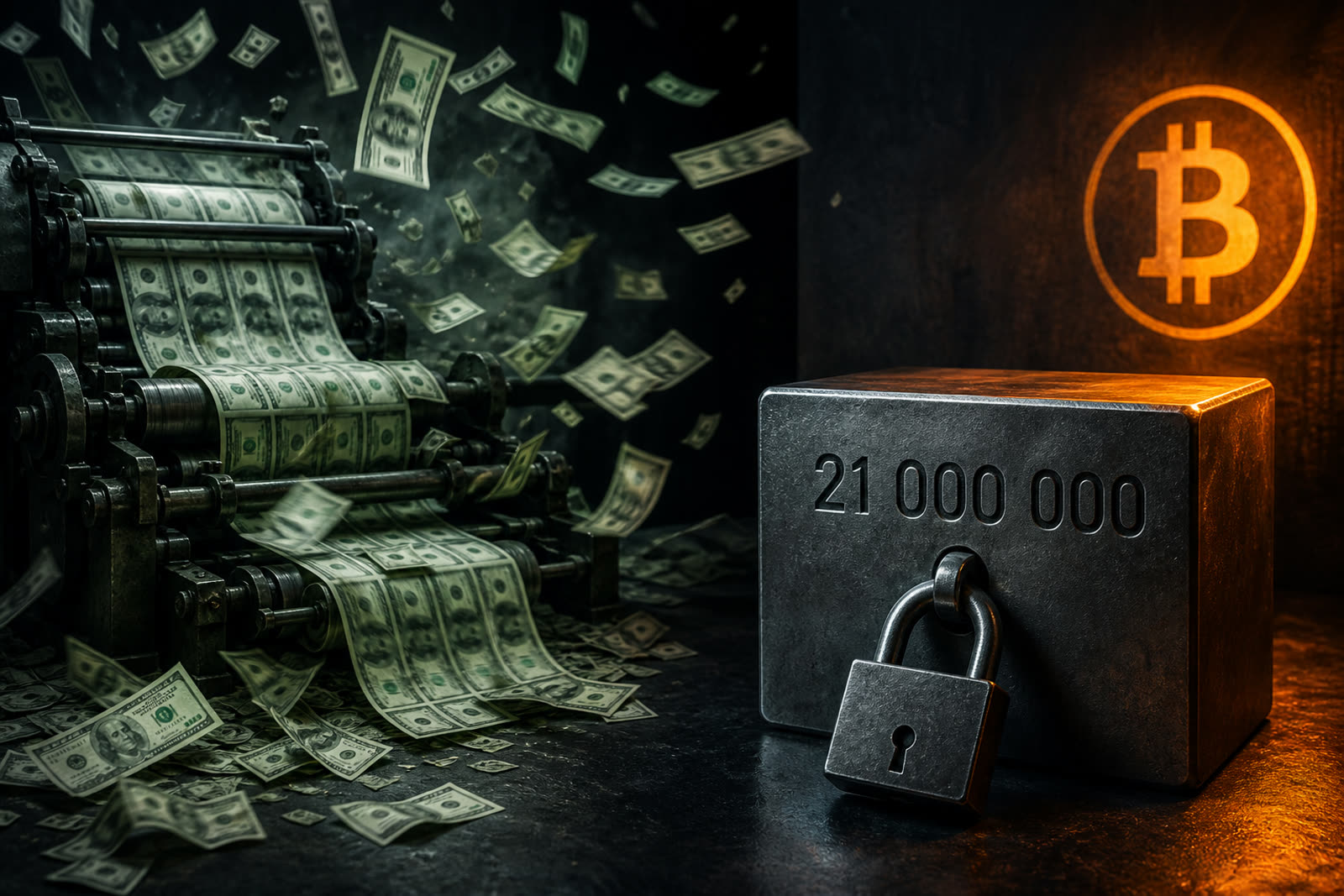
Bitcoin
21,000,000
Hard cap. The number does not move because a committee felt generous.
Everything else
21,000,000+
Units keep appearing. You cannot audit the printer from an exam room in Cypress.
What it is
Bitcoin is software that keeps a shared ledger of who can spend which coins. There is no Bitcoin Inc. There is no customer-service number that can reverse a send. There is a network of computers running the same rules, and a scarce unit those rules will not inflate.
The unit is bitcoin. There will only ever be 21 million, issued slowly, with the last fragments arriving around the year 2140. You can hold a fraction of one. The smallest everyday unit is a satoshi — one hundred millionth of a coin — which is why people talk about “sats” the way we talk about cents.
You can check the supply yourself. Block explorers, your own node if you get that far. You cannot do that with the dollars in a business checking account. The bank shows a number. The number is a promise. Whether the cap matters to you is a separate question from whether the code does what it claims. The code does what it claims.
Why a veterinarian cares about a cap
Independent clinics sit on cash that has to cover payroll, the landlord, and the next piece of equipment. That pile quietly loses purchasing power while it waits. I have watched ultrasound quotes and drug invoices climb faster than the interest on a “safe” account. That is not a conspiracy. It is what happens when the unit you save in can be created by someone else.
Bitcoin’s bet is crude: freeze the supply in the protocol so nobody at a desk can vote to print more when it is politically convenient. That does not make the price go up in a straight line. It does not pay the techs on Friday. It is one way to think about the third job of clinic cash — the reserve that should still mean something in ten years.
Hearthstone still bills in dollars. The front desk still runs on cards. Nothing on this page is an argument for making a client do bitcoin math in the lobby. It is an argument for understanding the money the practice already sits on.
There is no account. There are keys.
A bank account is a row in someone else’s database. They can freeze it, delay it, or get a subpoena. Bitcoin does not work that way. Spending requires a secret — a private key — that mathematically matches an address on the ledger. If you control the key, you can spend. If you don’t, you can’t, and neither can “support.”
The twelve or twenty-four words you write down when you create a wallet are the key, in a form a human can copy. Anyone with those words can empty the wallet from another continent. That is why the scam page exists, and why it comes before enthusiasm. Nobody legitimate needs those words. Not Coinbase. Not a text from a friend. Not a pop-up that says your wallet will be deleted in ten minutes.
If the coins live on an exchange, you do not have bitcoin. You have an IOU from a company that might be well run and might not. Exchanges fail. “Not your keys, not your coins” is rude and accurate. Learn self-custody on a tiny balance before you treat an app like a bank.
How a payment actually moves
You broadcast a transaction: this key is sending this amount to that address, here is the signature that proves the key. Nodes on the network check the signature and that the coins have not already been spent. Miners compete to stuff valid transactions into the next block. A new block shows up about every ten minutes. After a few blocks, reversing that send is no longer a hobby for a clever attacker. It is a physics problem.
That ten-minute rhythm is why on-chain bitcoin is a poor $48 dental copay. It is excellent at being final. It is not excellent at being a vending machine. Lightning is the layer that tries to make small, fast payments practical without giving up the scarce asset underneath. Different job. Same money.
Proof-of-work, without a lecture
Anyone can broadcast a transaction. Someone has to decide the order, and everyone else has to check that order without calling a referee. Bitcoin pays miners to burn energy on a puzzle that is hard to solve and cheap to verify. That cost is the security. Rewriting last month means redoing the energy plus outrunning the honest miners.
Yes, it uses power. That is the point of the design, not a bug someone forgot to patch. You can dislike the tradeoff. What I will not do is pretend a cheaper consensus is automatically safer. The longer version is why proof-of-work.
How people actually get some
Most beginners buy on an exchange with dollars, then — if they are paying attention — withdraw to a wallet they control. That is a regulated on-ramp in the US, with identity checks. It is also where a lot of coins sit forever because moving them feels scary. Sitting on the exchange is convenient until it isn’t.
You can also receive bitcoin from another person the way you receive a wire, except there is no wire room. They send to your address. You wait for confirmations. Done. No credit score. No business hours. Also no undo button. Send to the wrong address and the network does not care that you are a nice veterinarian.
You do not need to buy anything to finish this page. Reading is the whole assignment for now.
The part people skip: it moves a lot
The price can drop 30% in a stretch that also includes a senior dog and an overnight referral. If that sentence makes your stomach go, the amount you are imagining is too large. Write the number you could watch fall in half without changing how you staff a Tuesday, then cut it in half. Recurring buys beat a lump sum you timed because Twitter was loud. The DCA calculator is arithmetic, not a forecast.
Clinic money is a separate, slower conversation. Payroll and rent stay in dollars. A reserve slice — if you have one — is the only bucket this belongs in. That is the treasury page, and it is not a beginner move.
What this is not
- Not “the next bitcoin.” Most tokens exist to be sold to someone later. Learn this asset first.
- Not a personality. You do not have to orange-pill the waiting room. You do not have to take it at checkout.
- Not a get-rich schematic. If someone needs you to hurry, they are selling. Bitcoin will still be here on Monday.
- Not financial advice. A DVM is not a securities license. Talk to a CPA before clinic money moves.
If you want to start
- Read the scam list out loud. If they want the seed, the conversation is over.
- Use amounts you can watch drop 50% without changing how you live or run a clinic.
- Create a wallet. Write the words on paper. Send a tiny amount, wipe the wallet, restore, confirm the coins come back. Then — and only then — consider putting more on it. Details on holding keys.
- Ignore price talk at dinner. This is a slow asset if it is anything.
- If you like cards more than pages, the Orange Pill deck covers the same ground in swipes.
The properties, on one screen
Finite
21 million. You can check it. A dollar in a bank account does not come with that trick.
Expensive to cheat
Rewriting history means redoing the energy. Security is a bill, not a help-desk promise.
Yours if you hold keys
No business hours. No credit score. Also: lose the backup, lose the coins. Both things are true.
Always on
Saturday 11pm after a GDV. The network does not close. Your processor still might.
Settlement, not IOUs
Cards take 2–4% and a couple of days. Lightning can settle in seconds if both sides are set up.
Built in layers
Base chain is scarce and slow on purpose. Lightning is the fast lane. Do not confuse them.
Educational only. Not financial, tax, or legal advice. Next: scams, then custody.